
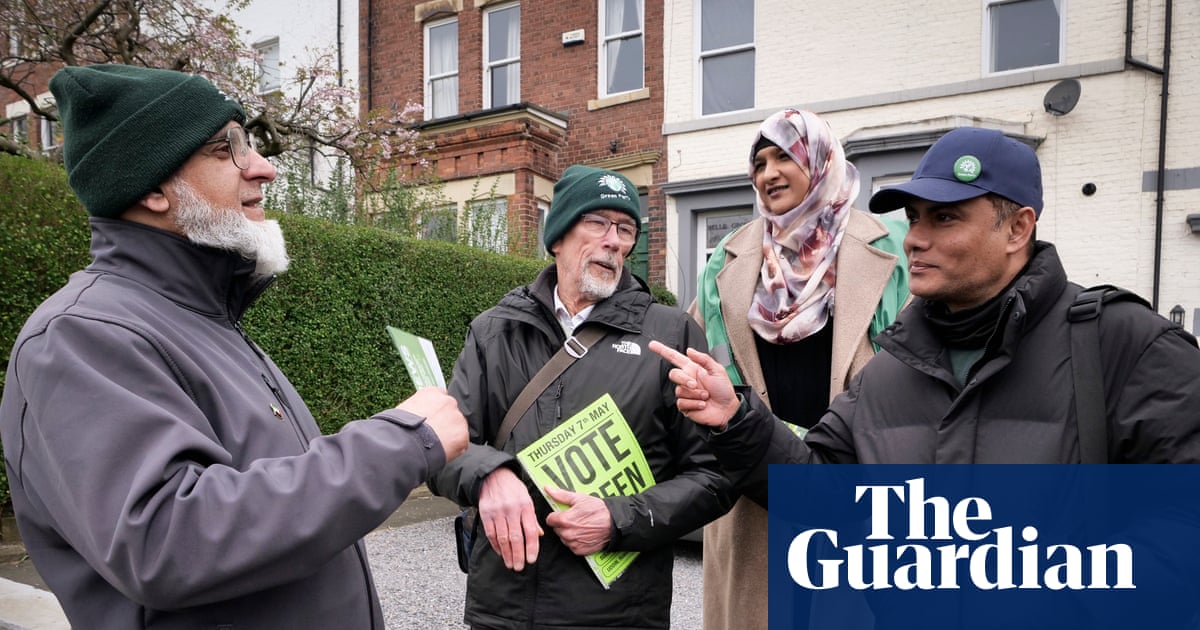
Muslim British Politics See Shift to Greens in Local Elections
In the lead-up to next month’s local elections, Muslim British politics are witnessing a significant shift towards the Greens. Campaigning in Newcastle has highlighted the growing concern among voters about the climate and cost of living, with many turning away from traditional party lines in search of more sustainable alternatives.
Mohammed Suleman, a self-described “straight-talking Geordie,” doesn’t love politics. The taxi driver and businessman prefers to focus on community initiatives. But when the time came, he voted Labour as the lesser of two evils. However, a recent conflict in Gaza sparked a reevaluation of his allegiances.
As Suleman explains, “The war in Gaza was like a wake-up call for me. I realized that my vote wasn’t making a difference in the way I thought it was. I wanted to do something more, but I didn’t know what.” It was then that he began to explore alternative options, and his interest in the Greens was piqued.
The Rise of the Green Party
In recent years, the Green Party has experienced significant growth among Muslim voters. According to a study by the Runnymede Trust, Muslims are more likely than any other group in Britain to vote for the Greens. This trend is particularly pronounced among younger Muslim voters, who are increasingly concerned about issues such as climate change and social justice.
One reason behind this shift is the growing disillusionment with traditional party politics. Many Muslim voters feel that mainstream parties are out of touch with their concerns and values. The Greens, on the other hand, have positioned themselves as a more inclusive and progressive alternative.
“The Greens are different from Labour or Conservative,” says Suleman. “They’re not just talking about the economy or national security; they’re talking about creating a better world for everyone.” This message resonates with many Muslim voters who feel that their voices are not being heard in mainstream politics.
Climate and Cost of Living: The New Concerns
In Newcastle, campaigning has highlighted the growing concern among voters about climate change and cost of living. Many residents are struggling to make ends meet, and the Greens’ focus on sustainability and economic justice is seen as a more viable solution than traditional party policies.
“I’m not saying that Labour or Conservative don’t care about these issues,” says Suleman. “But they’re not doing enough to address them. The Greens are willing to take bold action to create change.”
One example of this is the Green Party’s proposal for a national housing strategy, which aims to increase affordable housing and reduce homelessness. This policy has resonated with many Muslim voters who are deeply affected by the cost of living crisis.
A New Era for Muslim British Politics?
The shift towards the Greens in Muslim British politics marks a significant turning point for the community. It suggests that Muslim voters are no longer content to be represented by traditional parties, and are instead seeking out new alternatives that better reflect their values and concerns.
As Suleman puts it, “This is a new era for Muslim British politics. We’re not just talking about voting for a party; we’re talking about creating a new kind of politics that’s inclusive, progressive, and just.”
Only time will tell if this shift will be sustained beyond the local elections. But one thing is clear: the Greens have tapped into a deep sense of disillusionment among Muslim voters, and are offering a compelling alternative to traditional party politics.
The future of Muslim British politics looks bright – but only if the Greens can build on this momentum and create a more sustainable and just society for all.
As the local elections approach, the Green Party’s surge in popularity among Muslim voters is being closely watched by party leaders and pundits. The question on everyone’s mind is: what does this shift mean for the future of British politics?
One thing is certain: the Greens’ message of sustainability, social justice, and economic equality has resonated deeply with many Muslim voters. For Suleman and his fellow Muslims, the traditional parties have failed to address their concerns about climate change, cost of living, and social inequality.
“The Greens are different from Labour or Conservative,” Suleman emphasizes. “They’re not just talking about the economy or national security; they’re talking about creating a better world for everyone.” This inclusive and progressive approach has struck a chord with many Muslim voters who feel that their voices are not being heard in mainstream politics.
But what drives this shift towards the Greens? According to Dr. Sufyan Naqvi, a leading expert on Muslim politics, it’s a combination of factors. “There’s been a growing disillusionment with traditional party politics among Muslim voters,” he explains. “They’re looking for a more authentic and inclusive alternative that truly represents their values and concerns.” Related: Learn more about this topic.
Naqvi points to the Greens’ commitment to addressing issues such as climate change, social justice, and economic inequality. “The Greens have shown a willingness to take bold action on these issues, which has resonated with many Muslim voters,” he notes.
Another factor at play is the growing awareness of intersectionality among Muslim voters. Many Muslims are recognizing that their own experiences and concerns are deeply connected to broader issues such as racism, sexism, and economic inequality. The Greens’ commitment to addressing these intersections has helped to build a strong bond between Muslim voters and the party.
Of course, not everyone is optimistic about the future of the Green Party in Muslim British politics. Some critics argue that the party’s shift towards the left has alienated some of its traditional supporters. Others worry that the party’s focus on climate change and social justice may be seen as elitist or out of touch with working-class communities.
But Suleman is undeterred. “The Greens are not just talking about a niche issue; they’re talking about creating a better world for everyone,” he says. “We need to listen to the concerns of our fellow voters and work together to build a more just and sustainable society.”
As the local elections approach, it remains to be seen whether the Green Party’s momentum will continue beyond this election cycle. But one thing is certain: the party has tapped into a deep sense of disillusionment among Muslim voters, and has offered a compelling alternative to traditional party politics.
In fact, the Greens’ growth in popularity among Muslim voters has sparked interest from other parties as well. Labour and Conservative leaders are taking note of the shift towards the left, and are beginning to reassess their own policies on issues such as climate change and social justice.
“This is a wake-up call for all of us,” says Suleman. “We need to listen to our fellow voters and work together to build a more just and sustainable society. The future of British politics depends on it.”
As the stakes grow higher, one thing is clear: Muslim British politics are at a crossroads. Will the Greens continue to ride the wave of momentum, or will other parties adapt and seize the opportunity? Only time will tell.
But for Suleman and his fellow Muslims, the future looks bright. “We’re not just talking about voting for a party; we’re talking about creating a new kind of politics that’s inclusive, progressive, and just,” he says with conviction. The possibilities are endless, and the choices are clear: it’s time to build a better world – together.