
Solid Electrolyte Defects Drive Dendrite Initiation and Unstable Lithium-Ion Battery Performance
The quest for more efficient, cost-effective, and environmentally friendly batteries has led researchers to focus on the intricate mechanisms governing lithium-ion battery performance. At the heart of this pursuit lies a critical understanding of solid electrolyte defects – irregularities in the material’s crystal structure that can either hinder or accelerate the growth of dendrites within the electrode.
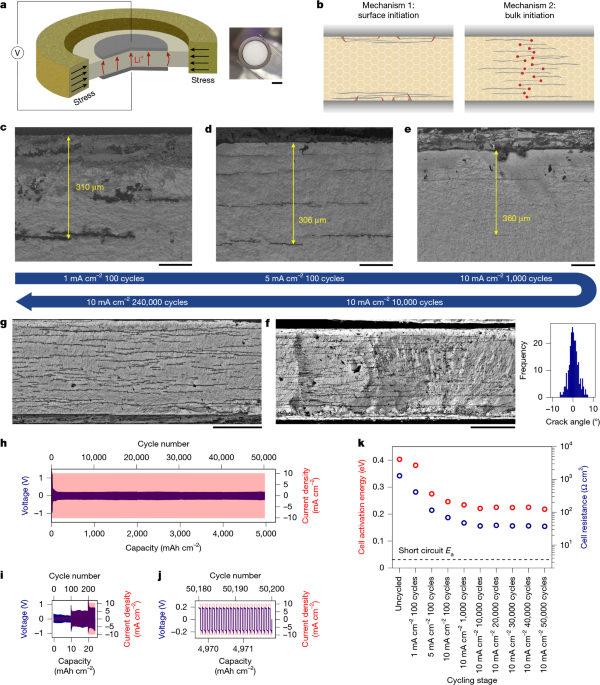
Solid electrolyte defects have long been recognized as a potential catalyst for dendrite formation, which can compromise the overall stability and longevity of lithium-ion batteries. The process begins when a tiny imperfection or vacancy in the solid electrolyte material creates an area where lithium ions can more easily move and accumulate. This localized concentration of lithium ions can attract additional metal ions from the electrode material, leading to the rapid growth of dendrites – thin, branching filaments that can pierce through the electrolyte and cause the battery to short circuit.
Understanding Dendrite Formation
Recent studies have shed light on the complex interplay between solid electrolyte defects and dendrite initiation. Researchers have discovered that defects in the solid electrolyte material can serve as nucleation sites for dendrite growth, allowing the process to begin more easily. This is because the irregularities in the crystal structure can provide a “sticky” surface for metal ions to bind to, facilitating their accumulation and subsequent movement towards the electrode.
Moreover, the presence of solid electrolyte defects has been shown to increase the rate at which lithium ions diffuse through the material. As a result, the concentration gradient between the electrode and the electrolyte becomes more pronounced, driving the growth of dendrites further. This phenomenon is particularly concerning for high-power applications, where rapid discharge cycles can accelerate dendrite formation.
Addressing Dendrite Initiation
To mitigate the risks associated with solid electrolyte defects and dendrite initiation, researchers are exploring innovative solutions to improve battery design and materials. One promising approach involves developing novel solid electrolyte materials with enhanced mechanical stability and reduced defect density.
For instance, researchers have been investigating the use of advanced ceramics and glass-ceramics as alternatives to traditional polymeric electrolytes. These materials exhibit improved thermal stability, reduced ionic conductivity, and a lower tendency for defects – all key factors in minimizing dendrite formation.
Another area of focus is on developing electrode materials with tailored properties to reduce dendrite initiation. By incorporating additives or dopants into the electrode material, researchers aim to create surfaces that are less conducive to metal ion accumulation and dendrite growth.
Solid Electrolyte Defects and Battery Performance
The relationship between solid electrolyte defects and battery performance is complex and multifaceted. While defects can accelerate dendrite formation, they also play a crucial role in modulating the electrochemical properties of the material.
For example, researchers have discovered that certain types of solid electrolyte defects can enhance the ionic conductivity of the material, allowing lithium ions to move more freely through the electrolyte. This phenomenon is particularly beneficial for high-power applications, where rapid discharge cycles are essential.
However, the negative consequences of dendrite formation and its association with solid electrolyte defects cannot be overstated. The resulting shorts and thermal runaway events can pose a significant threat to battery safety and reliability – issues that have plagued the industry in recent years.
Future Directions
As researchers continue to explore innovative solutions for mitigating dendrite initiation, it is clear that understanding the complex interplay between solid electrolyte defects and lithium-ion battery performance will remain a critical challenge. By advancing our knowledge of this phenomenon and developing novel materials and designs, we can work towards creating more efficient, cost-effective, and sustainable batteries for the future.
Ultimately, the development of next-generation lithium-ion batteries relies on a deeper understanding of the intricate mechanisms governing dendrite formation – including the pivotal role played by solid electrolyte defects. By addressing these challenges head-on, researchers aim to create batteries that not only meet but exceed our expectations for performance, safety, and sustainability.
To further exacerbate this issue, the rapid growth of dendrites can lead to a buildup of stress within the battery’s internal structure. This stress can cause the electrode materials to degrade more quickly, resulting in reduced battery lifespan and overall performance.
Furthermore, the presence of solid electrolyte defects has been shown to affect the electrochemical properties of the material, leading to changes in its ionic conductivity and ability to facilitate lithium ion transfer. These changes can have a significant impact on the overall efficiency and capacity of the battery.
Recent studies have also highlighted the importance of considering the thermal stability of solid electrolyte materials when developing new battery designs. As batteries are subjected to increasingly high temperatures during charging and discharging, the material’s thermal stability is critical in preventing dendrite formation and ensuring safe operation.
In addition, researchers are exploring the use of advanced computational models to simulate the behavior of solid electrolytes under various conditions. These models can help identify potential defects and optimize battery design parameters to minimize dendrite formation.
Despite these advances, there remains a need for further research into the relationship between solid electrolyte defects and lithium-ion battery performance. By continuing to investigate this complex phenomenon, researchers aim to develop new materials and designs that not only mitigate dendrite initiation but also improve overall battery efficiency and safety.
One potential approach being explored is the development of hybrid solid-electrolyte interphases (SEIs) – materials that combine the benefits of solid electrolytes with those of traditional polymeric electrolytes. These SEIs have shown promise in reducing dendrite formation while maintaining acceptable ionic conductivity and electrochemical properties.
Another area of focus is on exploring the use of nanostructured solid electrolytes to improve their mechanical stability and reduce defect density. By incorporating nanoparticles or nanotubes into the material, researchers aim to create surfaces with reduced reactivity and improved resistance to environmental degradation.
While these advances hold significant promise for improving lithium-ion battery performance and safety, it is essential to acknowledge the challenges that remain. The development of next-generation batteries will require continued investment in research and development, as well as collaboration between industry leaders, academia, and government agencies.
Ultimately, the quest for more efficient, cost-effective, and environmentally friendly batteries depends on our ability to understand and address the complex mechanisms governing lithium-ion battery performance – including the pivotal role played by solid electrolyte defects. By working together to advance this knowledge and develop innovative solutions, we can create a brighter future for energy storage and enable the widespread adoption of sustainable technologies.
In conclusion, the relationship between solid electrolyte defects and dendrite formation is a critical area of research that holds significant implications for lithium-ion battery performance and safety. By continuing to explore the intricate mechanisms governing this phenomenon and developing innovative materials and designs, researchers aim to create batteries that not only meet but exceed our expectations for efficiency, cost-effectiveness, and sustainability.