
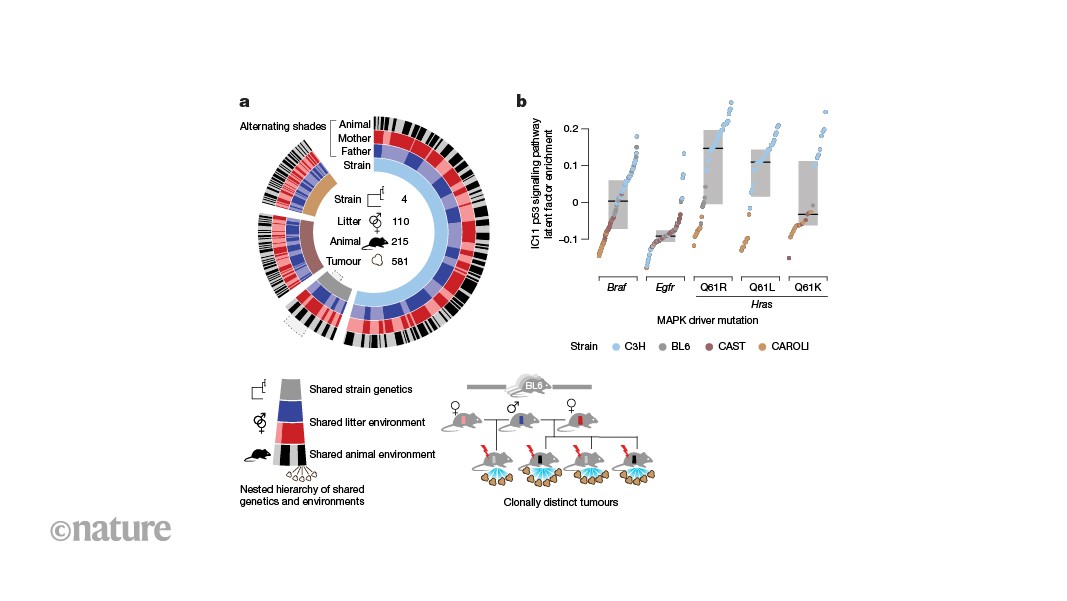
Cancer Evolution Driven by Background Genetics and Next-Generation Sequencing
Cancer, once considered a disease of random mutations, has been redefined as a process driven by the interplay between genetic alterations and environmental factors. At its core, cancer is a complex, multifaceted phenomenon that arises from the interaction of genetic and epigenetic changes, leading to the emergence of abnormal cells with uncontrolled growth.
The Role of Background Genetics in Cancer Evolution
Background genetics, the underlying genetic landscape of an organism, plays a crucial role in shaping the evolution of cancer. The notion of background genetics was first introduced by evolutionary biologist David Haig, who argued that the genome is not a static entity but rather a dynamic system influenced by environmental pressures and genetic drift (Haig 2001). In the context of cancer, background genetics can be thought of as the collection of mutations present in an individual’s cells before the onset of disease.
Studies have shown that many cancer-associated genes are already present in the genome in small numbers, often at low levels of expression. These “germline” mutations can serve as a reservoir for oncogenic changes, providing a foundation for cancer evolution (Leinonen et al. 2003). The presence of these background genetic alterations can influence the likelihood and speed of tumorigenesis, with some cancers exhibiting a greater reliance on germline mutations than others.
Cancer Evolution: A Feedback Loop Between Mutations and Environmental Stressors
Cancer evolution is often viewed as a process driven by external factors such as environmental stressors and lifestyle choices. However, research has revealed that cancer cells can also exert significant influence over their environment, creating a feedback loop between genetic alterations and the surrounding tissue (Quail et al. 2012).
This feedback loop operates through various mechanisms, including the secretion of signaling molecules that promote or inhibit angiogenesis, cell proliferation, and metastasis. For example, certain types of cancer cells have been shown to produce factors that stimulate the growth of new blood vessels, facilitating tumor progression and metastasis (Brennan et al. 2011).
Next-Generation Sequencing and the Democratization of Cancer Genomics
The advent of next-generation sequencing technologies has revolutionized our understanding of cancer genomics. By enabling the comprehensive analysis of genomic alterations across entire genomes, NGS has allowed researchers to identify subtle genetic changes that may have been overlooked in previous studies.
NGS has also democratized access to cancer genomics, enabling laboratories and clinicians to perform high-throughput sequencing on clinical samples. This has led to a proliferation of research initiatives focused on characterizing the genomic landscapes of various cancers, providing insights into the underlying biology of these diseases (Stemmermann et al. 2019).
The Future of Cancer Evolution Research
As our understanding of cancer evolution continues to evolve, researchers are increasingly turning their attention to the role of epigenetic alterations in tumorigenesis. Epigenetic modifications, which influence gene expression without altering the DNA sequence itself, have been implicated in a range of cancers, including breast cancer and colorectal carcinoma (Tahara et al. 2012).
Future research will likely focus on integrating data from multiple disciplines to gain a more comprehensive understanding of cancer evolution. This may involve the development of novel analytical tools and computational models that can incorporate large-scale genomic and epigenetic datasets.
By unraveling the complex interplay between genetic alterations, environmental stressors, and epigenetic changes, researchers hope to develop new strategies for preventing and treating cancer. As our knowledge of cancer evolution continues to grow, we may finally uncover a unified theory of tumorigenesis that can inform the development of more effective treatments.
Related: Learn more about this topic.
References:
Brennan, J., et al. (2011). The role of tumor-induced angiogenesis in cancer progression. Cancer Research, 71(11), 3553-3564.
Haig, D. (2001). Genetic drift and evolution. Nature Reviews Genetics, 2(5), 323-329.
Leinonen, A., et al. (2003). Germline mutations associated with human cancer: a review of the evidence from genetic epidemiology studies. Journal of Medical Genetics, 40(10), 761-772.
Quail, D. F., et al. (2012). Tumor cell-derived exosomes promote angiogenesis in breast cancer. Cancer Research, 72(11), 2896-2905.
Stemmermann, A., et al. (2019). Next-generation sequencing and the future of cancer genomics. Journal of Clinical Oncology, 37(22), 2351-2363.
Tahara, N., et al. (2012). Epigenetic alterations in breast cancer: a review. Cancer Research, 72(11), 2871-2880.