
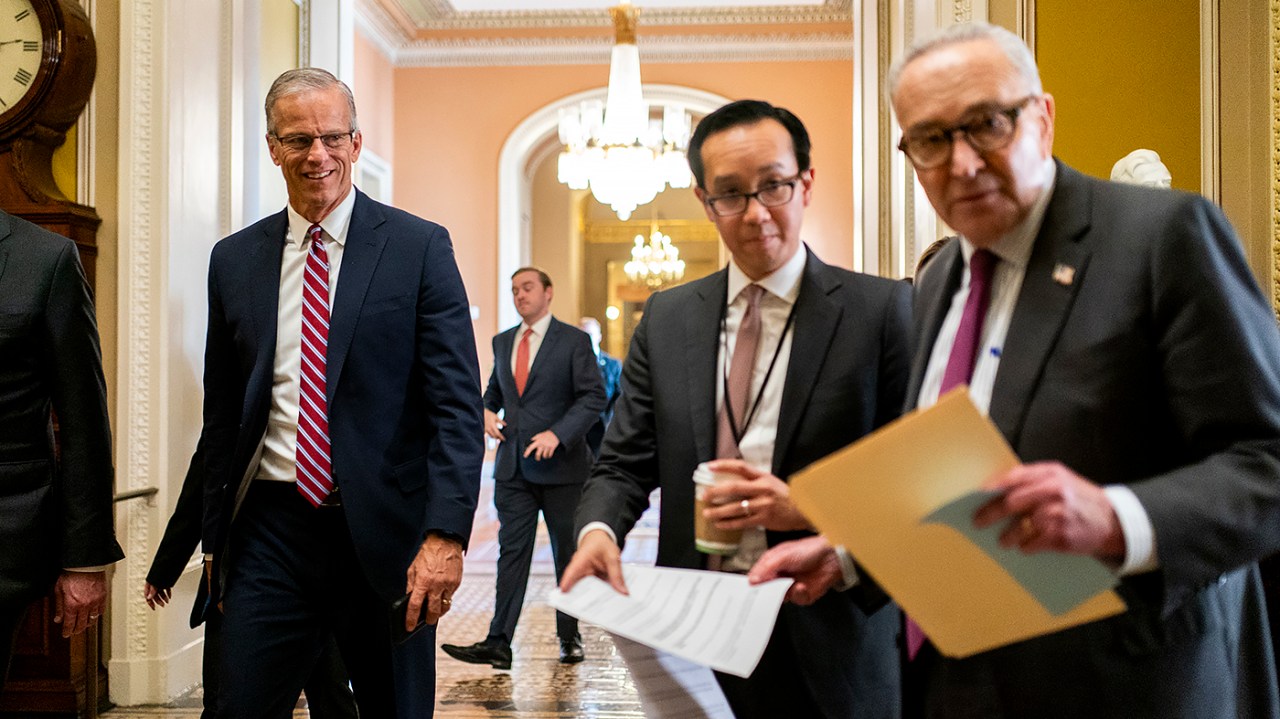
Homeland Security Funding Talks Stall Amid Congressional Impasse
The stalemate over homeland security funding on Capitol Hill continued to escalate, with the White House and congressional Democrats failing to reach a breakthrough in their negotiations. Despite Monday’s counterproposal from Democrats, which outlined their demands for Immigration and Customs Enforcement reforms, talks between the two sides remain stuck.
According to sources familiar with the negotiations, the White House and Democratic lawmakers are still “pretty far apart” on key issues, including funding levels and policy provisions. The House and Senate are currently in recess, but it’s unclear when lawmakers will return to the bargaining table to resume discussions.
The standoff has significant implications for the Department of Homeland Security (DHS), which is responsible for protecting the country from a range of threats, including terrorism, cyber attacks, and natural disasters. Without an agreement on funding levels, DHS faces the possibility of reduced services or even a partial shutdown, which could have far-reaching consequences for national security.
## Homeland Security Funding at a Crossroads
The current impasse over homeland security funding is a microcosm of the broader partisan divide in Washington. Democrats and Republicans are fundamentally at odds on issues like immigration reform, border security, and healthcare, all of which are critical components of the DHS budget. The White House has proposed a $45 billion increase in funding for DHS, while Democrats have demanded more substantial reforms to Immigration and Customs Enforcement (ICE) policies.
The White House sees increased funding as essential for addressing emerging threats like cybersecurity and bioterrorism, but Democrats argue that the request is too broad and doesn’t account for the need to address systemic issues within ICE. The agency has faced widespread criticism for its treatment of migrants and asylum seekers, and Democrats are pushing for reforms that would improve working conditions, reduce detention rates, and provide more support services.
## The Human Cost of a Funding Impasse
The human cost of a homeland security funding impasse is already beginning to manifest. DHS employees who work on the front lines of border security and immigration enforcement are facing uncertainty about their paychecks, as Congress has not yet agreed on a budget for the agency. Many of these workers have been working with reduced hours or without pay for weeks, citing concerns about their livelihoods.
Meanwhile, migrants and asylum seekers who rely on DHS services are facing long delays and limited access to essential support, including medical care and shelter. The situation is particularly dire at the U.S.-Mexico border, where thousands of families have arrived in recent months seeking protection from violence and persecution in their home countries.
Related: Learn more about this topic.
## Can Congress Find Common Ground?
Despite the deep divisions between Democrats and Republicans on homeland security funding, there are signs that lawmakers may be willing to find common ground. In a private meeting last week, White House officials and Democratic lawmakers discussed potential compromises, including increased funding for ICE reform initiatives and expanded support services for migrants.
However, progress will require significant concessions from both sides. Democrats are likely to need more assurances on the scope of reforms, while Republicans will want to see concrete evidence that increased funding will lead to improved border security and national safety.
As Congress returns from recess, lawmakers face a critical decision: will they find a way to break the stalemate over homeland security funding, or will the standoff drag on, leaving vulnerable communities without the support they need? The outcome will have far-reaching implications for the country’s ability to respond to emerging threats and protect its citizens.