
Space Exploration Takes a Giant Leap Forward with NASA’s Ambitious Plans
In a major shake-up to its ambitious Artemis program, NASA has unveiled new plans to ramp up development of a $20 billion moon base and a nuclear-powered ‘Freedom’ spacecraft, marking a significant shift in the agency’s space exploration trajectory.
The changes come as part of a broader effort to accelerate NASA’s presence in lunar space and set the stage for human missions to Mars and beyond. The Artemis program, which aims to return humans to the Moon by 2025, has faced several setbacks and delays in recent years, including the postponement of the Gateway lunar space station launch.
**NASA’s Lunar Ambitions**
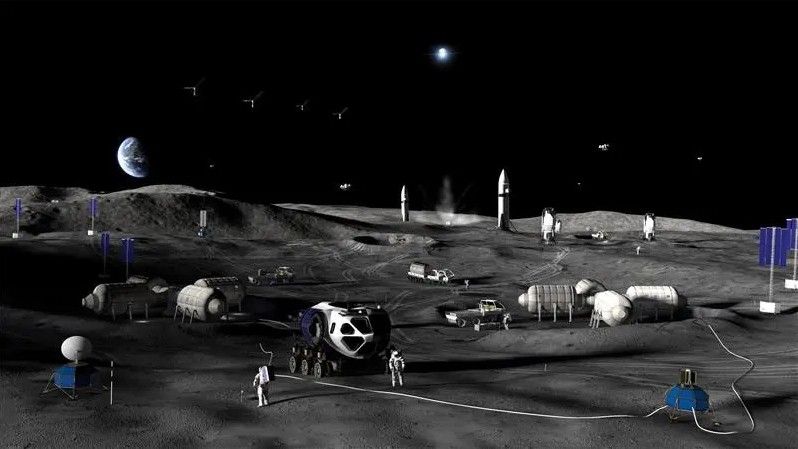
At the heart of NASA’s new plans is a bold vision for a sustainable human presence on the Moon. The agency has announced that it will focus on developing a permanent moon base, which will serve as a hub for scientific research, exploration, and development of the lunar resources.
The $20 billion investment in the moon base will enable NASA to establish a permanent presence on the Moon, with the capability to support multiple missions per year. The base will also provide a platform for testing technologies and strategies that can be applied to future human missions to Mars and beyond.
According to NASA officials, the moon base will play a critical role in advancing our understanding of the lunar environment and unlocking its resources. The agency has identified several areas of focus for the base, including the development of in-situ resource utilization (ISRU) technologies, which can be used to extract water and other resources from the lunar regolith.
**The Freedom Spacecraft**
Another key component of NASA’s new plans is the development of a nuclear-powered ‘Freedom’ spacecraft. The Freedom spacecraft will serve as a critical component of the Artemis program, providing a reliable and efficient means of transporting humans and cargo to and from the Moon.
The Freedom spacecraft is designed to be a versatile and adaptable platform, capable of supporting a wide range of missions and payloads. It will also provide a significant boost in power and propulsion capabilities, enabling NASA to explore more distant regions of the solar system.
**A New Era for Space Exploration**
Related: Learn more about this topic.
NASA’s new plans represent a major turning point in the agency’s space exploration trajectory. The $20 billion investment in the moon base and Freedom spacecraft marks a significant shift towards a more sustainable and ambitious approach to space exploration.
The Artemis program has faced several challenges in recent years, including delays and setbacks. However, with these new plans, NASA is signaling its commitment to pushing the boundaries of what is possible in space exploration.
As NASA looks to the future, it is clear that the agency’s ambitions are centered on establishing a human presence in lunar space. The moon base and Freedom spacecraft will play critical roles in advancing our understanding of the lunar environment and unlocking its resources.
However, this is just the beginning. With the Artemis program, NASA is also setting its sights on more distant regions of the solar system. The ultimate goal is to establish a sustainable human presence beyond Earth’s orbit, with the potential for missions to Mars and beyond.
As we look to the future, one thing is clear: space exploration is no longer just about exploring new frontiers – it’s about securing our place in the universe. With NASA’s ambitious plans, we are on the cusp of a new era in space exploration that promises to be both exciting and transformative.