
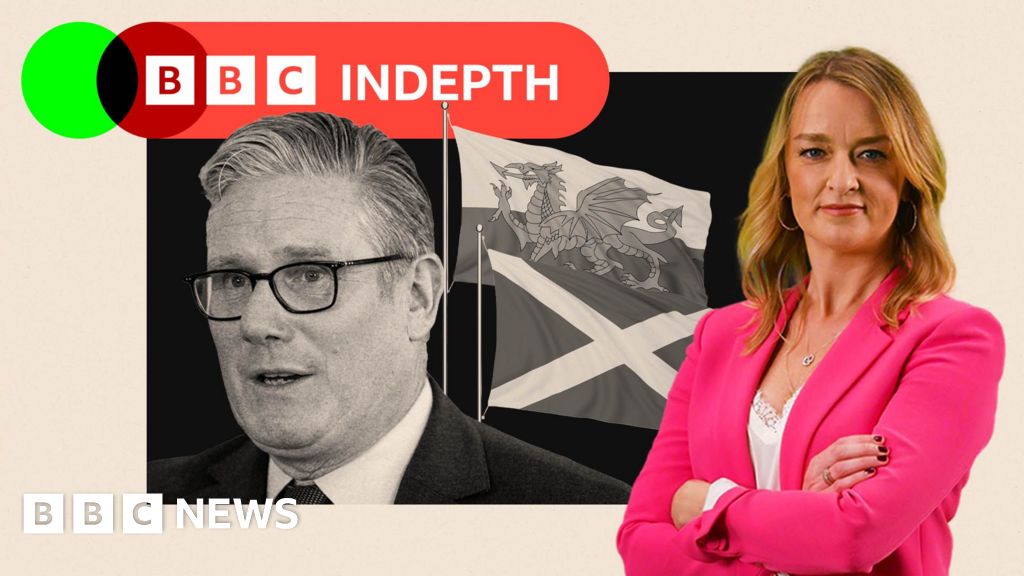
Scottish General Election Hinges on Keir Starmer’s Shambles
The Scottish general election, which is just months away, has become a referendum on the performance of the Labour Party and its leader, Keir Starmer. The party’s struggles to connect with voters and articulate a clear vision for Scotland’s future have raised questions about its ability to win the next election.
Starmer’s leadership has been marked by a series of controversies, from his handling of the party’s internal conflicts to his efforts to distance himself from Labour’s left wing. However, it is his policies on issues like Brexit and the economy that are likely to prove most contentious with voters.
The Scottish general election is seen as a crucial test for Starmer, who has yet to convince many Scots that he can deliver the kind of change they want. His party has been plagued by low poll ratings, and its failure to capitalize on the popularity of the independence movement in recent years has left it vulnerable to criticism from opponents.
The Shambles of Labour’s Campaign
One of the biggest challenges facing Starmer is his party’s lack of a coherent campaign strategy. The Labour leadership has struggled to articulate a clear vision for Scotland’s future, and its efforts to position itself as a credible alternative to the Conservatives have been hampered by internal divisions.
The party’s decision to adopt a more centrist stance on issues like Brexit has been particularly contentious with some of its left-wing MPs, who feel that it has alienated key parts of its base. This internal conflict has led to a series of high-profile defections, including the departure of several Labour MPs from the party’s left wing.
Despite these challenges, Starmer remains optimistic about his party’s chances in Scotland. He has argued that Labour can win over voters who feel disillusioned with the Conservatives and the Liberal Democrats, and that its commitment to social justice and equality can help it to build a broad coalition of support.
The Independence Factor
The Scottish general election is also likely to be influenced by the ongoing debate over Scottish independence. The Scottish National Party (SNP) has been a major force in Scottish politics for years, and its leaders have repeatedly called for another referendum on the question of independence from the UK.
However, the issue of independence remains highly contentious, with many Scots remaining skeptical about the SNP’s ability to manage Scotland’s economy and ensure the country’s place in the world. The Conservative Party has also taken a hard line on the issue, arguing that any move towards independence would be damaging to Scotland’s interests.
Related: Learn more about this topic.
Despite these challenges, Starmer has argued that Labour should support another referendum on Scottish independence, provided that it is held under terms that are acceptable to all parties. This stance has been welcomed by many SNP supporters, who see it as a key part of the party’s efforts to build a broader coalition of support.
The Road Ahead
As the Scottish general election approaches, Starmer and his team will be keeping a close eye on voter sentiment and trying to respond to concerns about Labour’s policies and leadership. However, despite its challenges, the party remains committed to its vision for Scotland’s future, and it is clear that Starmer will do everything in his power to ensure that Labour competes fairly in the election.
The outcome of the Scottish general election will be closely watched by politicians across the UK, who see it as a key test of their ability to connect with voters and build a broad coalition of support. As the campaign heats up, one thing is certain: only time will tell if Starmer’s Labour can overcome its challenges and win over Scots in the next few months.